


Avoid These 5 Mistakes When Planning a Flagstone Patio and Fire Pit in Ballantyne, NC
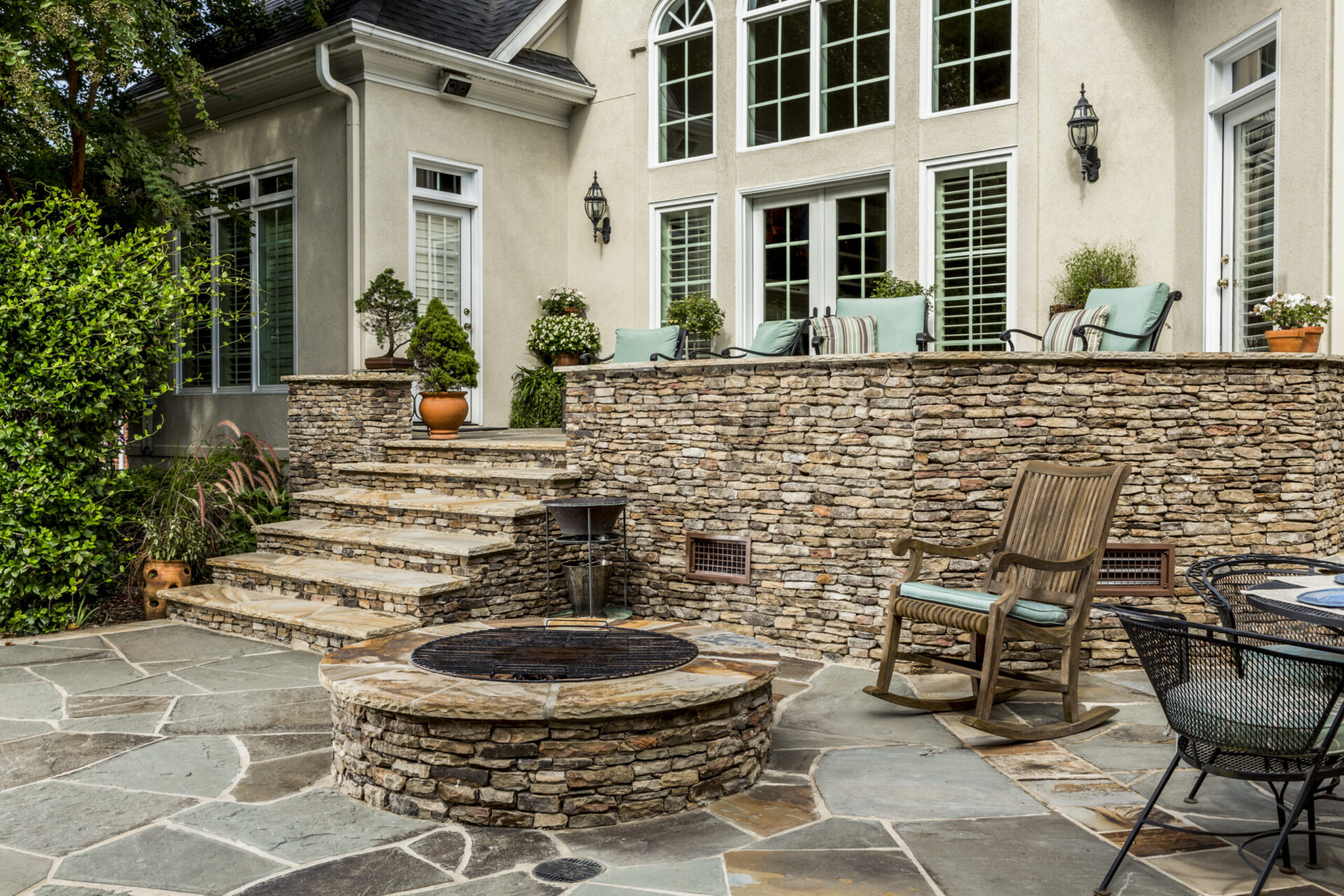
A great outdoor gathering space starts with more than choosing a pattern and picking a spot in the yard. The best results come from clear layout decisions, thoughtful grading, and the right material details from the start. When we design and build a flagstone patio and fire pit in Ballantyne, NC, we look at how people will move through the space, where heat and smoke will travel, and how the patio surface will handle weather over time.
Related: How Patio Builders in Wesley Chapel, NC, Use Flagstone Patios to Transform Outdoor Spaces
Mistake 1: Treating A Flagstone Patio and Fire Pit Like Two Separate Projects
The patio and fire feature should share one cohesive plan. When they’re handled separately, the fire pit often ends up feeling like an afterthought — placed too far from seating, too close to the home or positioned where smoke lingers. That’s why we plan the patio footprint and the fire pit location together so the finished space feels intentional and balanced.
A strong layout starts with how your group will actually use the space. We plan for seating zones that feel natural, walking clearance that doesn’t force people to squeeze behind chairs, and enough room for a table when hosting becomes part of the routine. We also think about focal points. A flagstone patio feels more inviting when the fire pit creates a natural gathering circle, rather than a scattered set of features competing for attention.
Mistake 2: Skipping Proper Base Prep Under A Flagstone Patio and Fire Pit
What sits underneath the stone matters just as much as what you see on the surface. When base prep gets rushed or underestimated, flagstone can shift, edges can settle unevenly, and joints can open up over time. A stable foundation needs to match the conditions of the site, including soil type, drainage patterns, and exposure.
Seasonal temperature swings and heavy rainfall can challenge outdoor surfaces in our area. The base should compact properly and support the weight of natural stone, furniture, and foot traffic. We also account for the additional structure of the fire pit, since that feature requires its own reinforced preparation within the patio system. When the base is right, the surface stays true, and the entire space feels solid underfoot.
Mistake 3: Ignoring Drainage And Grading Around A Flagstone Patio and Fire Pit
Nothing ruins a gathering space faster than puddles collecting near seating or water running toward the home. Poor grading causes most of the long-term headaches we see with patios, and it often starts with a design that looks great on paper but doesn’t respond to the slope of the property. Drainage becomes even more important when a fire pit is part of the layout, because water tends to collect in the center of gathering zones.
We shape the patio so water moves away naturally, and we integrate drainage solutions when the site needs extra support. That might include discreet channel drains, gravel borders in strategic areas, or grading adjustments that keep the surface comfortable and dry. A flagstone patio also benefits from smart transitions into nearby lawn areas, steps, or walkways, so runoff doesn’t erode edges or push sediment into joints.
Related: Choosing the Right Materials for Your Retaining Walls & Fire Pit in Matthews, NC
Mistake 4: Choosing The Wrong Jointing Approach For A Flagstone Patio and Fire Pit
Jointing can completely change both the look and performance of a patio. Some homeowners love a tighter, more refined style with narrow joints. Others prefer a relaxed look with wider spacing and natural texture. The mistake happens when the jointing material doesn’t match the design goal or the conditions of the space, especially when heat exposure from a fire pit is part of the equation.
We select jointing based on how the space will perform and how you want it to look. Some applications call for a durable polymeric jointing option, while others benefit from a more traditional approach that complements irregular flagstone shapes. Joint width, joint depth, and edge restraint all matter. When jointing is done right, the patio holds together, feels stable underfoot, and looks finished instead of improvised.
Mistake 5: Placing A Fire Pit Without Planning For Comfort And Flow
Fire pit placement should support conversation, comfort, and movement — not disrupt it. When location decisions happen late, the fire pit often ends up too close to the seating ring, too far from lighting, or positioned where guests walk directly through the hottest zone. That can make even a well-built flagstone patio feel awkward to use.
We plan fire pit placement with real-world use in mind. People need space to sit comfortably without feeling like they’re leaning into heat. They also need clear routes for walking through the patio without stepping between chairs or cutting across the main gathering area. When the fire pit aligns with nearby features like a dining zone, seating wall, steps, or walkways, the entire space feels connected instead of fragmented.
Related: Choosing the Right Hardscaping Contractors in Charlotte & Matthews, NC