


Custom Fire Pits in Fort Mill, SC: How a Mortared Stone Fire Pit Handles Heat
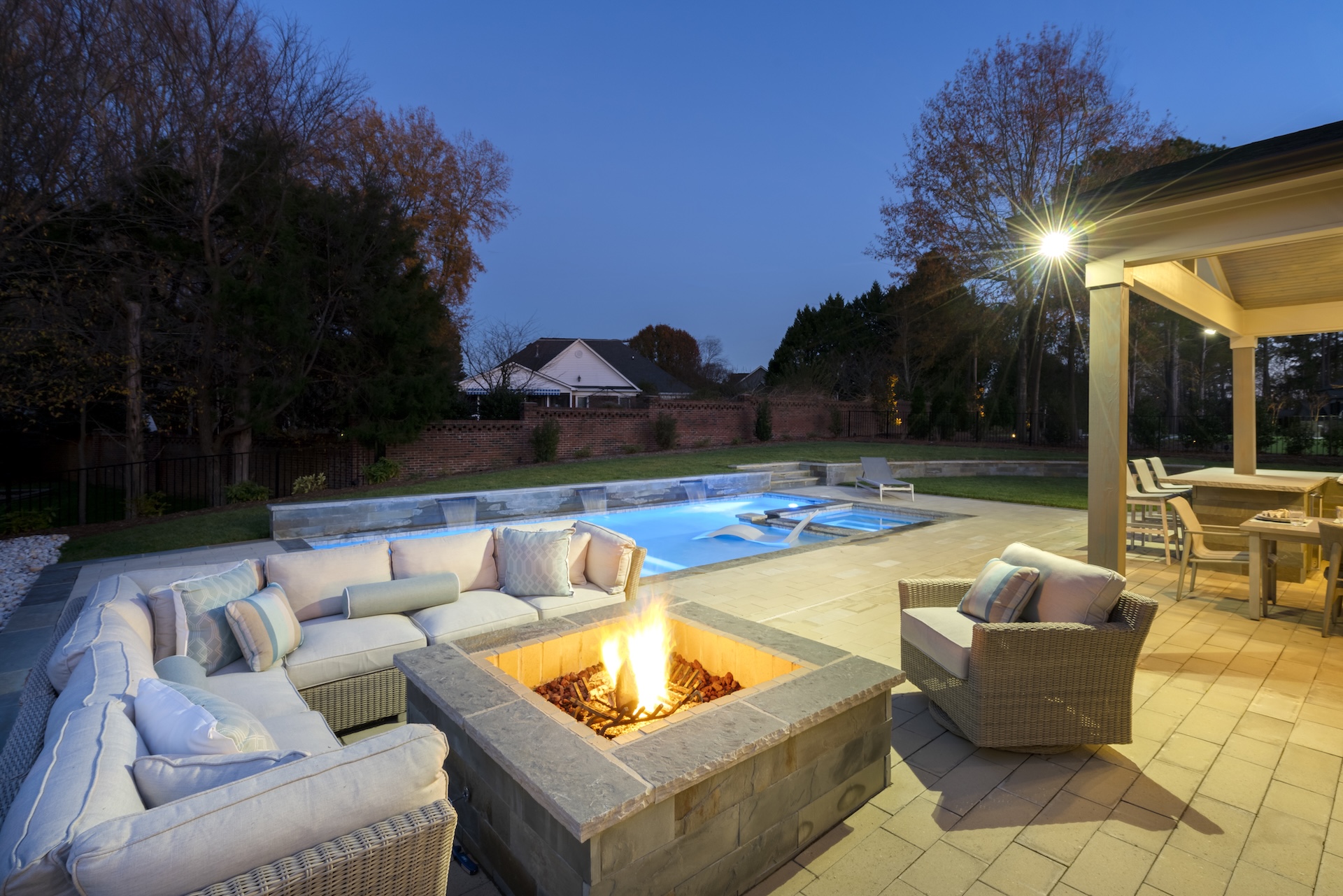
Heat is what separates a fire pit that lasts from one that starts shedding mortar in its third season. Custom fire pits in Fort Mill, SC get judged on the stone they are faced with, and the part that determines their lifespan sits on the inside where nobody looks.
Established in 2001, The Stone Man has created custom hardscapes in the Charlotte area for over 20 years. Our fire feature work is masonry rather than assembly.
The pit gets built from mortared stone over a footing, with a fire brick ring set inside it, and that construction is the reason the outside of the pit still looks right after a decade of use.
Related: What a Five-Year Warranty Says About a Masonry Contractor in Fort Mill, SC
Why Does A Fire Pit Need A Fire Brick Liner?
Because ordinary masonry was not made for direct flame.
Standard mortar and stone veneer expand and contract at their own rate, and repeated heating against them opens joints, spalls faces and eventually loosens the cap.
Fire brick is manufactured to take that thermal cycling. Setting a full ring of it inside the pit means the heat load lands on material designed for it rather than on the finished stonework.
The liner is also the part a homeowner never has to think about again. It absorbs the wear that would otherwise show up on the face of the pit, where repairs are visible and expensive.
What Does Mortared Stone Do That A Dry Stacked Ring Does Not?
Mortared stone stays where it was put.
A dry stacked block kit relies on gravity and friction, so units shift as the ground moves and as people lean on the rim.
A mortared assembly built over a proper footing behaves as one piece.
It also allows natural fieldstone to be fitted individually, which is why a mortared pit can be matched to a seat wall or a column elsewhere in the same space.
How Is A Fire Pit Cap Chosen And Cut?
The cap is chosen by the curve it has to follow.
Dressed flagstone slabs get cut on site to the radius of the pit so the joints stay tight and even the whole way round, with a slight overhang at the outer face.
The cap is the surface people set a drink on and lean against, so it wants to be thick enough to feel solid and level enough that nothing rolls off it.
Related: Three-Season Room Contractors in Fort Mill, SC: Enjoy the Outdoors in More Comfort
Should A Fort Mill Fire Pit Burn Gas Or Wood?
Both are built regularly and they suit different households.
A gas pit connects to the existing house gas line and turns on and off with a key, which favors short evenings and frequent use.
Wood asks for the process of gathering, laying and lighting, and some homeowners want exactly that.
The decision affects the plumbing and the access door, so it belongs in the design conversation rather than in a change order.
How Does A Fire Pit Relate To The Rest Of The Hardscape?
A fire pit is one element in a masonry assembly rather than an object dropped into a yard.
On the project shown above, the same fieldstone runs through the pit, a curved seat wall with a flagstone bench top and a column carrying the gas access door, so the whole area reads as one build.
Matching stone across those elements is a decision made at design, not something recoverable later. A pit built to match a patio laid three years earlier is a different job from a pit and patio drawn together.
Finished projects show the difference plainly. The assemblies that read as one build are the ones where the stone got chosen once.
Talk Through A Fort Mill Fire Feature With The Stone Man
A fire pit built as masonry, footed properly and lined with fire brick, is a long horizon investment in the space rather than a seasonal purchase.
The Stone Man designs and builds custom fire pits, fireplaces and fire tables across Fort Mill and the Charlotte area, and a design conversation is where the stone and the fuel get chosen.
In Summary
What does the fire brick actually protect?
Fire brick protects the mortar joints and the stone face behind them. It tolerates direct heat and expansion far better than the veneer and mortar used on the outside of the pit, so it takes the thermal load and the visible stonework stays intact.
How long does a custom fire feature take from design to finish?
Design is typically presented within two to four weeks, and larger outdoor living builds that include a fire feature commonly run two to four months on site. Engineering, permitting and any HOA approval happen after the design is settled, which is part of why the timeline looks the way it does.
Does a mortared fire pit need much upkeep in the Carolinas?
A mortared pit asks for two things: keeping the lava rock or fire glass clear of debris, and having the mortar joints looked over every few seasons. There is no annual service beyond that. A pit The Stone Man has footed properly moves less in Carolina clay than homeowners expect.
Related: How Landscape Lighting Installation in Fort Mill, SC, Changes the Way You Experience Your Yard