


Outdoor Lighting Turns the Hardscape You Built Into Something You Can Actually Use at Night
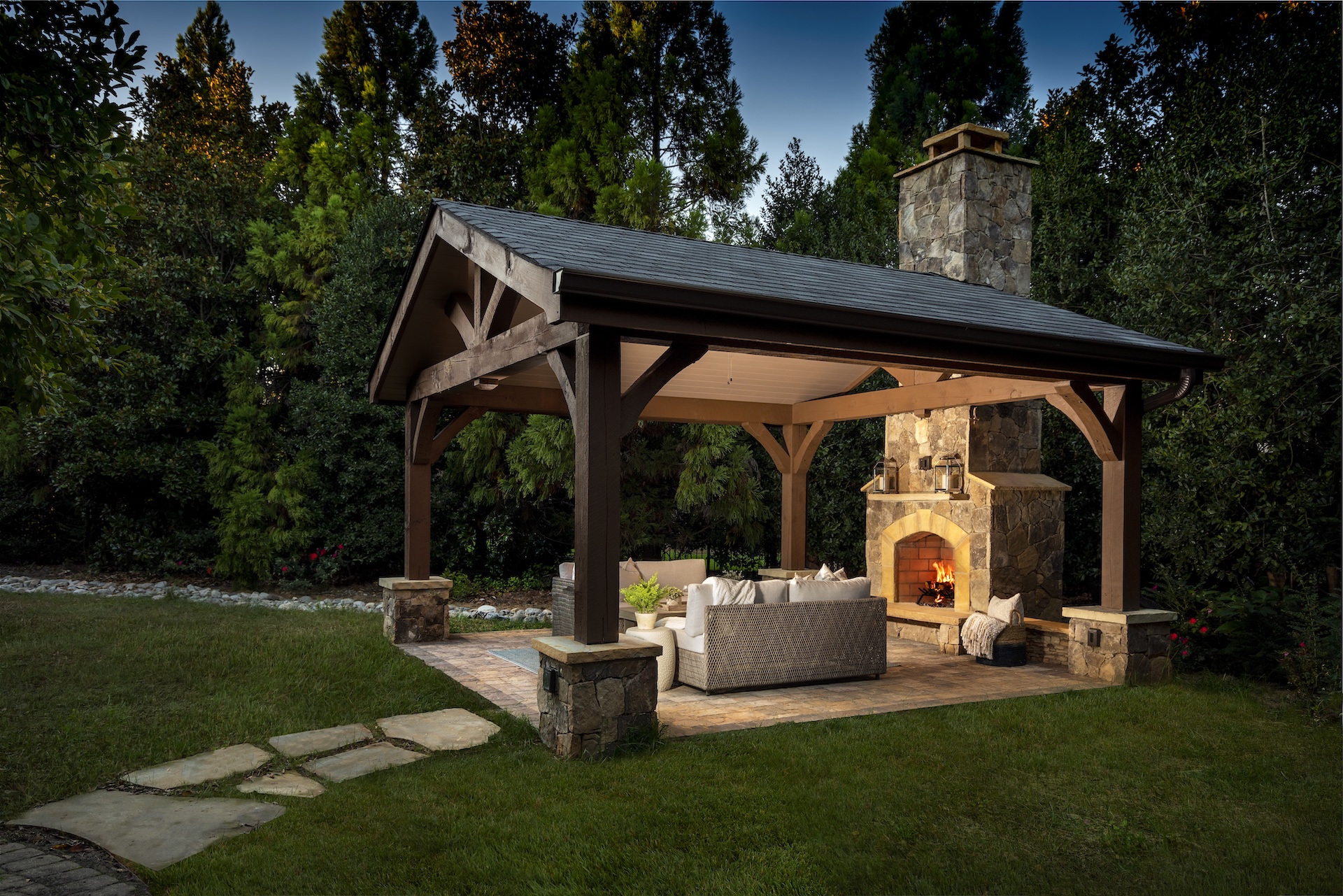
You invested in the patio. The outdoor kitchen. The fire feature. The stone walls. Every surface was designed, every material was selected, and every detail was executed with intention. And then the sun goes down, and the entire space disappears.
That is what happens to a hardscape without outdoor lighting. The investment is still there. The craftsmanship is still there. But nobody can see it, and nobody wants to use a space they cannot navigate comfortably after dark.
In the Charlotte metro, where the evenings are warm enough to be outside from March through November, the hours between sunset and bedtime represent some of the best time to use the outdoor space. Outdoor lighting is the element that makes those hours available.
Related: 5 Ways a Covered Patio With Outdoor Lighting Transforms Your Ballantyne, NC, Backyard
What a Lighting Plan Should Accomplish
A well-designed outdoor lighting system does not just illuminate the yard. It creates an environment. The goal is not brightness. The goal is layers of light that serve different purposes simultaneously.
A complete plan typically addresses:
- Path and step lighting along walkways, transitions, and grade changes to provide safe navigation without glare
- Accent lighting in planting beds and against stone walls to create depth, texture, and visual interest after dark
- Task lighting in the outdoor kitchen, the grill area, and the dining surface, so the space is functional for cooking and eating
- Ambient lighting from overhead fixtures, string lights, or structure-mounted downlights on a pergola or covered structure to create the warm, social atmosphere that makes people want to stay outside
- Architectural lighting that washes the facade of the house, the columns of a covered structure, or the face of a retaining wall with a soft glow that connects the hardscape to the home
When these layers work together, the outdoor space feels complete after dark. No single area is over-lit. No single area is invisible. And the overall impression is warmth and intention.
Related: The Art of Outdoor Living: Landscape Design Trends for Matthews & Ballantyne, NC, Residents
Why the Lighting Should Be Designed With the Hardscape
The best time to plan outdoor lighting is during the design phase of the hardscape project, before any stone is set. When the lighting is integrated into the construction, the wiring runs beneath the patio base, the conduit is concealed inside the walls, and the fixture locations are chosen for the best visual effect rather than the most accessible installation point.
Retrofitting lighting after the hardscape is complete works, but it compromises the result. The wiring has to route around existing surfaces. The fixtures end up where access allows rather than where design dictates. And the system feels like what it is: an addition rather than an integrated feature.
For homeowners across Fort Mill, Charlotte, Ballantyne, Davidson, Weddington, Matthews, Lake Wylie, Indian Land, Rock Hill, and the surrounding communities, the outdoor living season is long. The evenings are the reward. And the hardscape that was built to be enjoyed deserves to be seen after the sun goes down.
The Space Comes Alive Twice
A property with a well-designed outdoor lighting system gets two experiences from the same investment. The daytime version, where the materials, the colors, and the plantings are on full display. And the nighttime version, where the shadows, the glow, and the warmth of the light create something entirely different and, for many homeowners, something even better.
If your outdoor space goes dark when the sun does, that is not a limitation. That is an opportunity.
Related: What Homeowners Should Know About Designing Outdoor Living Spaces